Twisted Metal is a series which falls into the category of vehicular combat. It was first developed in 1995 by Single Trac (1995-1997). Following 1997, the series has been developed by various companies over the years. There have been seven installments of the game so far and the eighth one is set for release in 2011. The Twisted Metal Series have sold over 15 million copies in North America alone which goes to show just how consistently successful and popular they are all over the world. The series also has the title of the longest running series for Playstation under its belt.
Twisted Metal basically allows players to function within a fictional Demolition Derby. Players can choose various types of arenas, vehicles and weapons (ranging from Ballistic projectiles to mines). The player then enters an arena where he/she is faced by 5 or 6 opponent drivers. His job is to compete with other drivers and win the game by ramming his vehicle into those of the opponent drivers. Whoever has the most operational vehicle in the end, wins the game.
Each game has its own storyline but all installments of the series revolve around the theme be careful what you wish for, slightly falling into line with movies such as Wishmaster. The person organizing the races (mostly known as Calypso) has the power to intercede with reality and mold events in such a way as to satisfy one wish or desire of the winner of the combat. The winners have to use their words carefully when making a wish or the sadistic hosts twist the words to suit their own means. There is a lot of black humor in the game. Often, the winners don't have a happy ending because of this particular theme of the game.
The eighth edition of Twisted Metal is being developed by Eat Sleep Play. There is focus on 16 multiplayer and 4 player split screen features and there are several gaming modes for playing available as well. The latest edition offers a Nuke mode. This mode allows the user to choose a group to face an opponent group also selected by the user. Each faction owns a metal statue which is hoisted into the air by a helicopter; the opponent group must try to destroy this statue. In order for players to succeed in destroying these statues they must abduct the opponent team's leader, sacrifice him to a missile launcher which will in turn ignite a nuclear missile aimed at the opponents statue.
The Twisted Metal series hope to please audiences with the release of the eighth edition scheduled for release in 2011. Eat Sleep Play has already canceled to two Twisted Metal Series projects in previous years, therefore, the success of this game is of crucial importance to the production team.
Zombie Driver is exactly what I've hoped for. It could just as well be titled Zombies vs. Ambulances, Taxis, Limousines, Police Cars and City Buses. If ever you've wanted to hop in one of those vehicles and plow through the zombie hordes of an infested city, leaving bloody, red donut marks in the streets, well, there's a game for that now. Racing through highways, parks and side roads choked with undead staples like zombie dogs and exploding fat guys is unrelentingly fun, and while each mission tasks you with some kind of timed rescue the objectives are never terribly frustrating. The completion of secondary tasks, like clearing out nests of dead guys, provide rewards like unlockable vehicles and weapon upgrades, so there's always motivation for reaching greater levels of mastery.
The game's a bit short and doesn't provide much beyond the visceral glee of running over craploads of people who actually have it coming, but that's probably more than enough for the lean, $10 price tag. And some gameplay depth eventually emerges as the game introduces more undead types and a greater assortment of weapons and vehicles are unlocked and upgraded, requiring you to juggle considerations like armor, speed, and passenger capacity against the needs of the mission. Zombie Driver is good for at least a few afternoons of simple enjoyment, and anyone who ever bore affection for classics like Carmageddon owes it to themselves to drop a few bucks on the thing.
Let's all give it up to Rockstar and Max Payne, because the truth is, there is not one game that is more responsible for the massive change of direction that action genre has received than Max Payne. Essentially pioneering the art of gun-fu in modern day shooters, Max Payne created numerous gameplay techniques that have become staples of nearly every action shooter, bullet-time being one of them. After a six year absence, Rockstar finally revealed the third game in the series back in June 2009. And much to the surprise of many, Max Payne 3 looked almost nothing like a Max Payne game... Gone are the dim and drab settings of New York City, replaced with the lush and beautiful setup of Brazil's Sao Paulo. Gone is a leather jacket wearing mad man on the hunt for vengeance for his wife's murder; replaced by a madder man who's now sporting a beard, a bald head, considerable weight gain, and an all new job in the private sector for a wealthy family he is hired to protect. Max Payne 3's story takes place 12 years following the events of the last game, and will center around a double-crossed Max, triggering the mad man inside to burst.
Rockstar's Sam Houser has stated that for the third game, Max's personality has "drifted from bad to worse." Yikes. With that in mind, we can expect to see Max's painkiller addiction to carry over to the third title, as they will continue to act as his healing system within the gameplay. Much like other action games these, such as Uncharted, Rockstar will be implementing a bit more realism to the mechanics of Max Payne 3. One such implementation is a balance of weaponry, allowing Max to carry only two weapons at once: a handgun and a larger rifle or automatic of some sort (including shotguns, and such). But never fear, if you drop a larger weapon, that enables you to simultaneously dual-wield two handguns in a blazing glory.
When not using weapons, Max can take cover in a variety of ways, one of which of using a human body as a shield. Furthermore, Rockstar has stated that there will be an all new cover system in the game, but that it won't be an integral aspect, unlike many other action shooters out there. To us, that means Max Payne 3 is going to be so full of non-stop action that you'd rather storm through your enemies, as opposed to stalling and playing it safe. Furthermore, because things like crates and other objects will be destructible, you can only use cover for so long. Lastly, if Max is at the end of his life bar, he can gain a shot of adrenaline and immediate rejuvenation if he manages to kill the opponent who's depleted his life before the opponent can kill Max.
A visual style similar to the graphic novel approach of the first two games will be used in order to link the story together from act to act. But aside from that one similarity, Max Payne 3 looks entirely different from the franchise, and in this day and age where moody and drab settings are all too common, it's a nice change of pace to see Max end up in locale with lush qualities to it. Rockstar has said that Max Payne 3 will arrive anywhere between March-June 2010, and most certainly no later than July 2010. So it isn't that far off.
Become Captain America™, the ultimate Super-Soldier, in the darkest days of World War II as you face the Red Skull and his army in this epic third-person action adventure. Wield Captain America’s legendary shield to take out multiple enemies at once, deflect incoming fire back at your enemies, solve puzzles, and scale walls. Above all, hurl yourself shield-first into the fray, with the superior force of the world’s first Super-Soldier at your fingertips. Engage in free-flowing combat and acrobatic platforming to infiltrate Hydra’s massive and mysterious castle complex and battle the infamous Iron Cross, the forces of Hydra, and a host of nefarious enemies serving the Red Skull in an all-new Captain America story and adventure.
Captain America: Super Soldier combines an acrobatic combat system with fluid platforming and a highly tuned suite of shield attacks including melee combos.
The completely original story for Captain America: Super Soldier is penned by noted comic, film, and TV writer Christos Gage. The primary writer for the Marvel’s Avengers: The Initiative series of comics, Gage has written numerous books for major Marvel characters, including Siege: Captain America, Iron Man, X-Men, Spider-Man, Civil War: House of M, and Union Jack.
Key Features
Become Captain America: Engage in combat against enemies bent on world domination during World War II. Use your abilities as the ultimate Super-Soldier to infiltrate Hydra’s Castle and annihilate the forces of evil.
Use Captain America’s Shield: Your shield is your most powerful weapon and best defense. Use it to take out multiple enemies from a distance, block incoming attacks, destroy objects, solve puzzles, and reflect incoming fire back at enemies.
Capture the Castle, Save the World: Infiltrate a huge castle complex that’s both an acrobatic playground for the Captain’s physical prowess and a house of mystery, with enemies and danger at every turn.
Acrobatic Platforming: Extensive acrobatic abilities allow you to scale walls, climb ledges, and vault from poles to overcome environmental challenges. Master timing-based controls to execute advanced moves and discover multiple paths through missions.
Free-Flowing Combat: Move freely through the castle battlefield with acrobatic precision as you take down multiple enemies with devastating combos. Take control of a turret or grab a soldier from behind and use his weapons against him. Execute punches, kicks, grabs, vaults, and shield throws to unleash the power of Captain America.
Face Fearsome Foes: Face off against Captain America’s greatest villains, including the Red Skull, Arnim Zola, Baron Strucker, Madame Hydra, Iron Cross, and more.
Original Storyline Set in the Movie Universe: Experience the stirring tales of Captain America’s world with an original story by noted Marvel scribe Christos Gage created specifically for the video games and set in the movie universe.
Comic Book Legend: Created by the legendary team of Joe Simon and Jack Kirby in 1941, the iconic hero actually predates the Marvel name by 20 years, first being issued by the company’s predecessor, Timely Publications. Over 200 million Captain America issues have been sold in 75 countries, and the shield-wielding hero is a key member of the Avengers alongside comic book icons The Hulk™, Iron Man™, and Thor™ starting in The Avengers #4 in 1964.
Gamers in the United States might not be too familiar with the Kingdom Under Fire series. Even though role-playing games are popular in North America, Kingdom Under Fire doesn't have the same sort of following that other big RPG names do. So when I was on my way to a meeting with representatives from South Korean publisher Blueside, I didn't expect anything more than an everyday RPG. Soon after my meeting began, I came to the conclusion that Kingdom Under Fire II was my biggest surprise at this year's Tokyo Game Show. This action RPG looks stunning.
Those that haven't played any other Kingdom Under Fire game needn't worry -- this is a title that can stand on its own. The game combines the epic action of large-scale battles with the online functionality found in massively multiplayer online games. That formula alone sounds fantastic, but Kingdom Under Fire II is made all the sweeter by its incredible visuals.
I, unfortunately, wasn't able to play Kingdom Under Fire II for myself, but I didn't need to. The raw enthusiasm and pride the folks at Blueside have for their game is palpable and they played several missions for me to show me exactly why people should be excited about their project. Kingdom Under Fire II allows players to create their own hero that can belong to one of four different classes (more classes will be added later). Not only do players control the hero character on the battlefield, but they can also command troops at the same time, giving the game a pinch of real-time strategy.
In the game, players will be able to execute traditional combos with their hero character and cast a wide variety of spells, including techniques that assist the friendly troops around them. When I was watching the game being played, the hero would charge into a group of enemies and unleash a torrent of attacks, while his troops charged in behind him. I was especially impressed with the camera work during battles, as the screen will shake and shift with the action, making the experience much more urgent than if the player's view was static.
Although it looked like a button-masher at first, Kingdom Under Fire II requires some definite skill, as players must jump between troop divisions on the fly to issue commands. During one particular mission, the Blueside representative had to continuously switch between his main troop and a ranged support troop further up the battlefield. These support troops would unleash deadly volleys that peppered the hero's enemies from afar.
The real beauty of the game, however, comes from the sheer spectacle of what's happening on the screen at one time. Hundreds, if not thousands, of nicely detailed units clash on the battlefield as arrows and gunfire saturate the sky. I was blown away when massive monsters entered the fray, stomping across the war-torn hills and scattering soldiers like pebbles through the air. In a trailer that was shown to me, a small group of dragons descended on the battlefield and unleashed green fire onto the helpless soldiers below.
The action of Kingdom Under Fire II was fantastic, but there's plenty of hardcore RPG goodness as well. There's a robust character creation system in place for designing your ideal hero, and almost everything in the game can be tweaked, from your clothing and accessories to the troops under your command. In fact, I was told that there would be more than 100 different troop types available at the start, meaning you will have tons of soldiers to work with as you travel across the world.
This is where the game's massively multiplayer functionality comes into play. The world of Kingdom Under Fire II is a persistent one that can be accessed by thousands of players at once. When you travel across the world map (on foot or by airship, which you can purchase further into the game), you'll see other players traveling in the same environment. Although only eight players can participate in a battle at once, many more will exist in your game world, which is designed to enhance the feeling of community in the game.
Kingdom Under Fire II is an example of a low-profile game that's impressive because of the great efforts of the developers behind it. Of course, there's no way for me to know at this point in time if the game controls well and is fun after extended periods of play, but I have reason to suspect that this game is one to look forward to.
Kingdom Under Fire II is tentatively scheduled for a North American launch at the end of next year. The game is being developed for PCs and consoles, though console specifics have yet to be unannounced.
Square Enix has recently announced plans to publish a new Tomb Raider prequel, which will tell the origin story of one of gaming’s most famous heroines, Lara Croft. "Forget everything you knew about Tomb Raider, we are exploring things that have never been done before in this game," says Darrell Gallagher of development studio Crystal Dynamics This is an origins story that creates Lara Croft and takes her on a character defining journey like no other."
The announcement also comes with a brief description of the premise for the upcoming prequel: ‘After a brutal storm destroys the boat she was travelling on, a frightened young woman is left washed ashore on an unknown beach. On her own but not alone she has only one goal, to survive.’
Also included with the announcement were several logos, as well as a snapshot of the January 2011 cover for Game Informer magazine, which will feature a 10-page story on the new game. The announcement did not include official details concerning an expected release date or what platforms the upcoming prequel will release on. We have contacted Square-Enix for further information.
Pandora Saga is a 3D fantasy MMORPG set in a mystical European medieval world. The game is currently being published by GonzoRosso, a Malaysian game publisher (Playable Worldwide though). Choose from six different races in a warring nation and participate in large-scale warfare.
Pandora Saga Overview
Pandora Saga combines elements of magic and strategic war tactics to create a challenging gaming experience. This Japanese MMORPG is centered on three warring nations in medieval Europe. Players have their pick from six distinct races, each possessing extraordinary abilities. There are four basic classes in Pandora Saga that can later progress to twenty-eight higher classes. The first class change starts at level 20. Listed below are the four basic classes:
Warrior – Warriors are masters in hand-to-hand combat. They specialize in the art of the sword and melee fighting. Warriors are key players in battle due to direct attacks and ability to withstand a considerable amount of damage from opponents.
Scout – Scouts are skilled archers. They serve as deadly assassins striking enemies from far off ranges. Scouts can quickly attack assisting aiding party members in intense battles.
Acolyte – Acolytes are valuable players. They possess the ability to keep a group alive in the midst of war. Acolytes cast healing and support spells that can revive multiple members.
Mage – Mages are one of the most powerful classes when it comes to battle. They cast a variety of magic spells that deliver massive damage to opposing enemies. Their only weakness is close-range fighting.
J.R.R. Tolkien’s fantasy tale of epic struggle across the war-torn Middle Earth landscape has always been full of death and destruction, but previous games haven’t quite captured the sheer brutality of war at its grisliest. That’s about to change. The next Lord of the Rings installment takes off the kid gloves and ramps-up the violence. Dismembered limbs, beheadings, splattering gore: War in the North has it all. After getting an up-close and personal taste of the mayhem during a recent hands-on session, it’s clear this cooperative hack-and-slash fest certainly doesn’t skimp on the bloodshed.
Developer Walkthrough: The Lord of the Rings: War in the North Mount Gundabad (HD)
Venturing beyond the bounds of the series’ core canon, Lord of the Rings: War in the North features an original story that revolves around three playable heroes (a dwarf brawler, a human ranger, and an elf mage) who head northward to investigate and confront a massing army led by one of Sauron’s generals. Our demo kicked off with a flock of giant eagles dumping the trio of heroes onto a snowy mountaintop draped in fog and howling wind. Taking up arms as the burly dwarf, we led the charge into several chaotic battles that showcased the game’s new Mature-oriented combat.
Each of War in the North’s playable characters has unique strengths, abilities, and weaknesses that come into play in critical ways. The gameplay emphasizes interdependent co-op and careful teamwork, since the party is stronger as a focused unit. Breaking off from the group or failing to capitalize on each character’s role tends to lead to a quick death all around. In battle, our dwarf could soak up solid damage and deal out punishment far more readily than the other two classes, though his special powers were more limited in scope. In contrast, the elf mage wielded powerful magic, including a spell that temporarily shielded the group from incoming arrows, and the human ranger specialized in stealth attacks yielding critical hits. Gaining experience in battle also lets you upgrade skills, unlock new powers, and specialize in different areas of combat.
Theoretically, all the potential ability options at your disposal and the dynamic nature of having a well-balanced group should provide a broad range of tactics to wield. But once we were hurled into the fray against groups of meaty orcs and hulking troll brutes, the intense action devolved into chaos almost immediately. At first, battle proved to be far from smooth – encounters against larger foes had us getting frequently wet-ragged to the ground, taking a long time to recover and sometimes even glitching our dwarf into the environment itself. Eventually we got a feel for the combos and dodge maneuvers, and being able to stay upright for more than a few seconds at a time gave us a chance to cleave some skulls. Chaining successful attacks in rapid succession lets you enter into a temporary “heroic” mode where you’ll dish out serious damage on foes, making it possible to take down larger adversaries quickly.
The emphasis on brutal combat yields intense encounters that are bloody and satisfying, even if battle is still buggy in the game’s current state. There were moments where combat turned into a total frenzied mess, but the action really came together when each team member was on-point and working together. The game’s cooperative element extends well beyond carving the limbs off of smelly orcs, too. Each character has other special race abilities that prove useful outside of the fray. Our dwarf, for example, was able to detect a secret tunnel entrance inside a cave that other players weren’t able to see. You can also trade and gift items to other players, which is helpful considering the large amount of loot you’ll find.
Despite some general bugginess and loosy-goosy moments on the battlefield, our time with Lord of the Rings: War in the North had its notable high points. The sudden shift toward the blatantly bloody kicks up the realism of battle nicely, and the cooperative elements have a lot of potential to shine once the rest of the game is fine-tuned. We’re cautiously optimistic that this new direction for the series could pan out in exciting ways.
Playing Diablo 3 is like being a little kid again with a pile of birthday presents laid out before you. You race to get to the next monster, environment and level-up, tearing and ripping and cutting everything open in a mad dash, hellbent on one thing: the precious gold and XP inside. The previous Diablo games, both undisputed classics, were frantic click-and-loot fests with an action RPG sheen, but Diablo 3 ups the frenzy quotient further, blessing every single click with satisfaction both instant and deep.
The game's matured a bit since we saw it last year -- the build at BlizzCon this weekend showed off the game's final class, the Demon Hunter (or "Huntress," in this demo), as well as a new 3-vs-3 arena mode and an updated UI system. There's still a lot of work to be done, but the development is definitely progressing, and the game's core gameplay is up and running. And it is as rewarding as video games get.
The Demon Huntress
The Demon Hunter class is an interesting take on the standard ranged class -- as Blizzard told the Con during the Diablo 3 gameplay panel, the character is meant to convey a dark sense of desperation (in that she will do anything to stop evil), as well as a bit of shadow magic and technological wizardry. The character art never crosses into the realm of steampunk, but the dual crossbows give the class a bit of a firearm feel, blasting waves of damage in various directions. I also played with a shot that slowed enemies and an explosive Bolo Shot that fired a wraparound projectile, which exploded after a short delay.
The Demon Hunter is forced to be very nimble, too, aided by her Vault ability, which flings her across the screen in a blur of acrobatic flare and dark magic. Since some enemies can close range quite quickly, you're meant to use this move often.
Just as with the other Diablo 3 classes, the Demon Hunter really starts to shine once you mix and match its abilities. It's fun to try to just bolo a bunch of enemies, sure, but temporarily hinder their advance with a slow shot -- enough time to lay down a trap -- and then bolo them, and then vault away just as they reach you (only to be ensnared in your trap -- and, of course, engulfed in the bolo explosion) and you realize that Diablo 3's combat requires a little more thinking than most hack-n-slash games. The Barbarian, for example, can use his Ancient Spear to pull a target close, ground stomp to stun, and then swing for the fences; and the Monk can sprint into the middle of a crowd, whip out some kung-fu, and then use a new ability called "Wave of Light" to finish off the monsters and heal himself from the damage.
This stacking strategy goes even further with the new Rune system, which has evolved in the new build. Runes are special gem-like items that augment skills rather than gear, so the Monk's electric fist might be turned into a poison fist, or the Barbarian's Leap might grant a stun or a knockback. Runes are great fun, especially since Blizzard has done a lot of work to make the "Rune-shaped" abilities very diverse. My Wizard found a rune that turned his Hydra spell (usually just a summoned hydra that shoots fireballs) into a fire wall, and it completely changed the way I used the spell and played the class.
The skill tree itself has received a UI facelift that makes it simpler to browse and choose abilities; though Blizzard has suggested it's likely to change again before release. Traits are better implemented, too, but they are still very much a work in progress.
The BlizzCon build also shows off the Talisman feature, which moves Diablo 2's charms out of the inventory and into a special paper doll slot. Additionally, the new demo included a few quests: one was straightforward and had you teaming up with a friendly NPC vendor to get revenge on a nuisance partner; and the other asked players to dungeon crawl through bits and pieces of story about a king driven mad by the powers of Hell. Neither quest was fully fleshed out, and they functioned more as placeholders in the demo -- and we're forced to keep waiting to learn more about the game's story.
PvP Battle Arena
The player-versus-player arena mode was also up and running in the new demo -- in 3-on-3 form. And it was chaos.
Diablo 3's graphics are flashier than its predecessors, and when you have six characters filling the screen with spell effects like meteor drops, zombie dog pets, Barbarian whirlwinds and the Demon Hunter's spike traps, things get confusing. Add in runes and the way they completely change the way some spells look, and I had a hard time narrowing down solid strategies in the twenty or so matches I played.
There were a few reasons for this: For one, the game's not yet fully balanced; plus we were all thrown into the arena with characters, runes and abilities we'd never seen before. In the final version, you'll be playing in the arena with your own leveled-up character (though some spells may not work quite the same in PvP as they do in co-op).
Still, overall, the BlizzCon demo was fun as all get-out. Even before you crack open the rune system or the skill trees, just tooling through a dungeon killing slimy things is full of great payoffs; from tons of sweet loot and gold (you can even earn extra XP for killstreaks or killing multiple monsters with one ability) to fleeting pleasures like catching a crowd of zombies in an environmental trap. Even breaking open the "crates" is fun -- instead of generic boxes, Blizzard has decorated the dungeons with unique items, like old torture racks and an inexplicable and creepy "Bucket of Blood"; and all are there for you to break open and find the delicious candy inside. The rewarding gameplay is heightened by the gorgeous graphics: enemies die with very satisfying animations and the level-up "flash" your character experiences is just plain beautiful.
Though I'm convinced we won't see the finished product before 2012 (and, of course, Blizzard hasn't even dared to pose a suggested release date), no matter when it's done, Diablo 3 shows every sign of being well worth the wait.
During certain moments of inFAMOUS 2, in what I can only blame on some kind of self-afflicted pop-culture overload, I desperately and irrationally desired that Thor himself, Norse/Marvel God of Thunder, drop down from the sky to challenge my on-screen persona, Cole MacGrath. This desire sums up rather well how I feel about the anticipated sequel from Sucker Punch Productions: I’m pretty sure I could take a hammer-wielding Viking deity in a fight, if only the designers would throw such a worthy foe my way.
inFAMOUS 2 builds upon the excellent foundation established in its predecessor: give the player mass powers of electric destruction, present a standard good-and-evil moral duality, and let them loose in a city to do as they will. In the sequel, the player begins with several of the abilities learned from the first go-around in Empire City: static thrusters (a floating mechanic) and electric grinding in particular, which grant the player a more immediate mobility. This decision deemphasizes the relatively competent parkour mechanics, but they’re still there, waiting for Cole to ledge-hop and freerun his way to the rooftops, should he feel so inclined.
In combat, players are given a nearly overwhelming number of offensive capabilities. Abilities are grouped into logical types: projectile, grenade, missile, melee, precision, push, kinetic, ionic, and each of these groups is assigned its own button. As the player progresses through the game, further abilities in these categories are unlocked (through a rather well-executed pseudo-achievement system) and subsequently purchased using experience points. The experience points are a minor gripe of mine, and feel shoehorned into a game that doesn’t need such a out-of-place mechanic; the points are doled out in a very measured fashion, and simply mucking about the city doesn’t give enough of a bonus to bother grinding anything out. Still, the system hardly impedes the player’s progress.
And there are moments, oh, there are moments. As a gigantic behemoth tears down the city streets, I electromagnetically lifted one car, then another, and hurled them into his flank. Nary a scratch. Lesser minions begun to charge down the streets, threatening to overwhelm and divert my attention as officers and civilians die in spectacular fashion. I send a devastating, lightning-infused tornado to clean up the rabble, and then begin peppering the behemoth with the more accurate sticky grenades and precision strikes. I repel several of his projectiles with a kinetic shield, and begin my assault anew.
An impressive setpiece, to be sure. But thanks to the overwhelming power bestowed upon the player, even said behemoth offers very little real threat. Moreover, that battle is reused, in nearly identical circumstances, later in the game. In fact, literally every single enemy, even creatures you would assume are major boss encounters, are rehashed at some later point, which weakens the game as a whole. And, despite the occasional massive beast, 96% of all enemy encounters are with one of three basic enemy types: pushovers, the lot of them. I felt like a God, but one reduced to burning ants with a magnifying glass.
The game opens in Empire City, but after a brief and humbling encounter with The Beast--essentially a giant lava monster, alluded to heavily in the previous game--Cole flees to Louisiana’s New Marais to augment his abilities. Your primary allies are Dr. Kuo, a defected CIA agent, and your old pal Zeke, a sort of Jack Black/Elvis hybrid. You’ll also encounter the chaotic and fiery Nix, and the traditional southern-baptist-turned-maniacal-villain, Bertrand. Your overarching goal is collect enough energy to power something called the RFI, the only thing capable of downing the Beast.
It’s a bit over-the-top, but it works, in no small part due to the fine voice acting from the cast. Dr. Kuo in particular (voiced by Dawn Olivieri) is a standout performance. The morality system is given a hefty bit of weight as well: besides altering your available abilities, your moral decisions will affect available missions, change alliances within the narrative, and offer two vastly different endings. The duality between Nix and Kuo, each pushing the player in a different moral direction, is particularly well done.
The city of New Marais is vivid and bright, even if its denizens feel a bit daft with regards to artificial intelligence. The city is large enough to feel expansive, but limited enough to allow the player to become mostly familiar with their surroundings as time progresses. Later in the game, two previously closed off areas open up to expand the city even further, but these regions are simply far too dull to sustain any kind of extended interest in the surroundings. The main thoroughfares are where the city’s charm lies.
The game’s structure is standard but effective: the open world gives waypoints and markers denoting the next objective, which usually consists of tracking down and taking out some number of enemies. The game occasionally shows flairs of creativity in mission design, but in general, combat is the bread-and-butter. These are broken up by one of two types of cutscenes: in-engine, with motion capture tech, or the stylistic comic-book-esque presentations from the original. Both work equally well. While the mission variety and pacing do tend to drag, especially toward the end, the narrative’s conclusion is certainly a compelling enough reason to move forward.
There’s plenty to do outside of the game’s primary missions: over sixty optional missions allow you to regain control over sections of the city, expelling any sort of violent encounter in the area. Hundreds of blast shards hidden around the city offer an increased electrical capacity, “Dead Drops” offer an expanded view of the game’s narrative, and Sucker Punch has thrown in a new wrinkle in the form of UGC, or User Generated Content. Players can construct, albeit with relatively rudimentary tools, custom missions and share them with the world. These require a bit of technical ability, and I’ve yet to see one really blow me away, but it adds a nice additional touch in a world already loaded with nice touches. Even discounting additional content and playing the alternate morality, there’s easily fifteen hours of content.
inFAMOUS 2 is a game that easily improves on its forebear. It’s likely one of the best superhero-sandbox game ever made, and though it has its flaws, the game remains a polished experience from start to finish; “I’m too absurdly powerful” is one criticism that the development team will just have to live with. A graphical powerhouse with gameplay to match, Sucker Punch Productions delivers a fantastic addition to any Playstation 3 owner’s library.
Take Gears of war, Oblivion, a little Army of Two and you have yourself Hunted. The demon’s forge is Set in a medieval fantasy world. You control two heroes. A barbarian named Caddoc and a lady Elf named E’Lara. Caddoc specializes in melee moves and brute strength, while E’Lara is quick. She also is great with a bow and arrow. Caddoc slashes the enemies up close, while she picks them off from a distance. It’s no secret this game has coop going on.
Several places have simple puzzles, but they require teamwork to get through. Similar to Army of Two, you’ll need both characters to work together to open huge doors, move structures in dungeons and more. This is a dungeon crawler at its heart, with the next-gen mechanics companies use like crazy. Here’s where Gears of war kicks in. There’s a roadie run button, and a cover system. The problem with the cover system, and parts of the game, is that its flawed. A few times playing coop online with a friend, I got stuck to the cover and I could not break free of it. You can vault over the cover, but that doesn’t feel particularly smooth either.
Hunted uses the unreal engine, but it comes with mixed results. Sometimes Hunted will look dazzling, but in certain places the visuals will dip significantly in quality. I’m a big fan of consistency, especially in 60 dollar games.
The A.I. is pretty solid, and they put up a good fight for their-self. Sometimes the CPU will make foolish decisions like running out into the open to get slaughtered, but it’s not as frustrating as it could have been. If your ally does happen to get put down though, it works just like Gears. I really mean just like Gears. The screen will go red and the character will have to tap the button to crawl to the other person for a revival. They copied so much in that aspect, but really they should have copied more. What comes next is the most frustrating problem with the game.
Hunted naturally gets tough. They put you through brutal, and violent battles as you go along. The melee feels great and the magical abilities can all be upgraded. Like many dungeon crawlers, there’s tons of stuff to pick up along the way. Health/Magic Potions, more armor/weapons and the Regeneration Vial. The Vial ruins the experience big time for me. When your teammate gets put down, you simply cannot go over and pick the person up, you need a Vial. If one of you dies its game over. I couldn’t tell you how many times my friend was put down, and there were no Vials around at all. Maybe if you wipe out all enemies in a room then the person could come back? Nope. I cleaned the area of creatures, and all I could do was watch my teammate die right in front of me.
The story is pretty solid, and the characters are pretty interesting. The way they both interact with each other is magical. It will certainly remind you of Army of Two. The Constant joking and jabbing helps gives the game a good boost. Once you beat the game, you can come back with your souped up person and try the Adventure Plus mode. Also there’s a map maker mode which you can post online. Its pretty similar to the God of War 3 challenges. You can lay out rooms, and decide how many waves of creatures players will face in each room, and what kinds of enemies they will face. Pick your poison.
Hunted equals a decent summer title. Fun characters, brutal combat, and serviceable coop. It’s a game that’s worth a look, but there is definitely some bumps in the road.
The PlayStation Blog recently announced the exclusive release of the remastered Tomb Raider Trilogy on PlayStation 3. Get ready to live or relive Lara Croft’s adventures in Anniversary, Legend, and Underworld this March 22.
Nostalgia’s been in the air, with all the talk on Game Rant about Lara’s reboot since Square Enix’s announcement last December, followed by Game Rant‘s covering the game in action. Now gamers will have a chance to play the three most recent retail releases at a price lower than Underworld’s MSRP itself: $39.99. While the going rate for PS2-only revives such as the Sly Collection and God of War Collection retailed at $39.99, the inclusion of current generation games seems to make this a steal even Ms. Croft could be proud of.
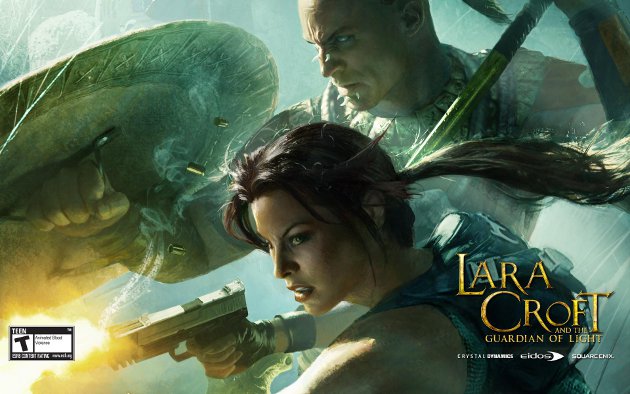
Lara’s most recent excursion was actually a digital-only release. Lara Croft and the Guardian of Light hit XBLA August 18, 2010 as a timed exclusive, and Game Rant reviewed it with high marks. The game was starkly different than previous Tomb Raider entries, but its co-operative, dungeon crawling play seemed very fitting for Lara’s world. Platforming and puzzle solving elements helped the game retain its familiar brand; trophies, hidden items, time trials, and high scores forced gamers back to leaderboards constantly to race to the top.
Lara herself has often been considered a prize catch. Some gamers may fear that the reboot of Lara Croft will force her to shed some of her appeal (read: bustier proportions). While the dimensions of Lara undoubtedly must change for an earlier story arc, gamers get the full monty that is the adult Croft in this trilogy. For those that need even more Lara in their lives, Tomb Raider Trilogy includes an exclusive static theme pack, Lara Croft and Viking Thrall avatars, and behind the scenes looks at all three titles.
My question to fellow gamers is this: what do you think all these collections from only a few years ago say about games or the market today? While these remakes ride the success of their namesakes, is this a testament of a stale current generation?
Aside from making a quick buck, I thought HD remakes served a different purpose. I purchased The Sly Collection and plan on purchasing Beyond Good & Evil HD to make publishers aware that these are awesome games that deserve more love. An HD Trilogy of a game series that has current generation console releases is hardly in the same boat. Will you be purchasing this trilogy?
The Tomb Raider Trilogy releases exclusively for the PlayStation 3 March 22, 2011.
The Yakuza series has always been a cult class in the US. The Yakuza games are very big in Japan, and the 5th entry in the Yakuza franchise is currently on the way. Unfortunately due to some poor advertising by Sega of America the Yakuza games aren't that popular and the US nearly didn't receive Yakuza 3 at all. It wasn't until fans complained and nagged Sega that they finally brought over Yakuza 3 to the US, although it was a year or two after it had released in Japan and Sega actually removed a few features such as a Japanese trivia game and Japanese hostess bars. Thanks to Yakuza 3 being a mild success in North America Sega is bringing Yakuza 4 to the US in March, and the hostess bar will be in tact this time.
Yakuza 4 is a 3rd person beat-em-up RPG set in an open world. Sound different? That's because there's not many other games on the market like it. You go running around the streets of Japan looking for mission objectives, and those mission objectives usually involve you fighting a group of enemies in hand-to-hand or weapon-to-weapon combat. Once you complete the mission you have the ability to level up your character and improve their stats. When you're not selecting missions you are free to run around the city and do a variety of things, including Karaoke, visiting arcades, and playing baseball.
Yakuza 4 has always been a story-heavy series. While Yakuza 1 received a full American voiceover all of the subsequent games have retained their Japanese voice acting and had merely English subtitles. Yakuza 4 follows the same trend as the last two games in only having English subtitles, with no other option than Japanese voice-overs. In this writer's opinion reading the subtitles is something that you become used to, although I can definitely understand those who get frustrated reading all of the text just to understand what's going on. Considering the majority of Americans don't speak Japanese Sega should really consider bringing back voice-over translations for the Yakuza franchise. Maybe give people an option to switch between Japanese and English voice-actors.
One thing different to Yakuza 4 is that you will play 4 different characters in this Yakuza game, as opposed to the standard one. The main protagonist of the series Kaz is still playable, but you'll also get to try out three additional characters including a loan shark, an escaped convict, and a cop. Each character has a slightly different fighting style with different moves and combos to break up some of the repetitiveness of the previous games. All 4 of these characters can pick-up and use weapons, and all 4 characters can be leveled up individually.
One thing that Yakuza has always gotten right is the ability to make player's feel as if they're really beating the crap out of somebody. The game controls like a mixture between a 3-d fighting game and an old beat-em-up like Streets of Rage. Yakuza implements a combo system that is simple enough to pick-up and play yet deep enough for veteran games to sit down and master. The camera will slow down and zoom in on brutal shots making the player feel as if they're really inflicting some serious damage. Yakuza also features special moves which are flashy and fun as well as finishing moves to provide a satisfying conclusion to your fight. Weapons can also be used during fights. Weapons can either be picked up from the environment or if you're already holding the weapons you can select them at any time during the fight by using the d-pads. There's a strong variety of weapons to choose from including nunchucks, spears, and katanas.
One thing that has always bothered me during my playtime in the Yakuza games is the use of random battles. While roaming the streets searching for missions or just strolling the streets seeing what the game has to offer you will be approached by enemies who want to fight. These fighters aren't very hard and don't level up your character as much as you'd like. Considering the game has been out in Japan for almost a year now it's hard to imagine this is something that will be changed for the final US release.
With that said Yakuza 4 is still a very fun and very unique game. The graphics have received a major upgrade since the last title, and the addition of 3 new characters to play as instead of just Kaz is more than welcomed. English voice-overs would have been nice, but if you can get past that detail Yakuza 4 is still an enjoyable game. Look for Yakuza 4 to hit the PlayStation 3 in the US on March 15. The demo currently on the PlayStation Network allows you to test out all 4 characters in arena style fights against multiple opponents.
Get ready to once again pick up your celestial brush and protect Nippon from all the evils in the world. You may think that in order to do this you’ll need a super strong, masculine hero, but you’re wrong. You’re going to be saving all of Nippon as a puppy. A cute, adorable, huggable little puppy named Chibiterasu. Chibi, also known as Mutt, also known as Pooch, also known as Dude, etc., is the hero of Capcom’s sequel to Okami, Okamiden. We got to spend over ten hours previewing the title, and believe us; we’ve never said “Aww…” so much while playing a game. Ever.
Okamiden takes place nine months after the events in Okami, developed by Clover Studio, which has since gone under, in 2006 and later re-released for the Wii in 2008. Okamiden takes all aspects from the original game, for better and for worse.
In the opening levels of the game, you’re teamed up with your new partner, Kuni. The lovable Issun is still in the game, and pops up from time to time, but only as a miniature helper. Kuni is the son of the swordsman Nagi and his love interest Kushi from the first game. Kuni and Chibi start their adventure once again learning the ropes of the celestial brush, and gaining powers that are very reminiscent of brush strokes in the first game. A new technique in Okamiden is the power of Guidance which allows you to lead your partner to various to areas which will help you to solve puzzles or acquire treasure from chests.
Brush strokes such as Sunrise, Rejuvenation, Power Slash, Bloom, Vine, Cherry Bomb, Waterspout, Galestorm, and more all make their appearances in Okamiden in one way or another. This time around, the children of the respective Celestial Gods grant you their powers, resulting in absolutely adorable cutscenes in which you can’t help but smile.
The brush strokes are also very intuitive with the DS controls, much better than they ever were for the PS2 or even for the Wii. Strokes are easy to draw now, and most of them turn a different color so you know that you’re doing it right. For example, when you draw a Waterspout the ink turns blue, or when you draw Vine the ink turns green.
The story is very dynamic, the characters are all endearing, but none of that helps the fact that the cutscenes in Okamiden are long, and pop up all the time. Half of the time you’re actually playing the game, while the other half you’re just watching the events play out. The option is available to skip the cutscenes, even if you’ve never watched them before, but valuable information and tons of super cute scenes play out during them so we didn’t mind watching them. This is the type of thing that also happened in Okami, and we wish that they would have used at least some voice acting this time around.
Aside from Kuni, Chibiterasu also partners up with a slew of new characters, all with their own respective abilities, that are reminiscent of people from Okami. A valley boy-esque member of Waka’s moon tribe named Kurow with has the ability to walk over chasms, a stubborn mermaid vassal of Otohime named Nanami who can control water, and a headstrong actress named Kagu with the ability to vanquish spirits, who trains in Sei’an City where Queen Himiko once ruled.
Characters aren’t the only thing that is back in the sequel. A lot of Nippon’s various locations are back as well, and look almost as good as they did in the original game. If you’re familiar with the locations from Okami, you’ll have no trouble navigating through the world in Okamiden. Very little is closed off for the player, and areas like Sei’an City seem just as large as in the first game, and are still inhabited with all of the same lovable characters like Mr. Flower doing his silly Gura Shuffle.
There are also a handful of brand new areas, all filled with interesting characters, side quests, and items for you to collect. These cities are a joy to explore, and as you gain new abilities you can always go back to them to find even more items.
It’s simply amazing how stunningly beautiful Okamiden looks. The cel-shaded, watercolor graphics transport fantastically to the DS system, and each level is vivid with so much color and life that every once in a while you have to stop to admire your surroundings. Using bloom on Guardian Saplings in Okamiden is just as beautiful as in the first game. But because of how much information is constantly being put on the screen, frame rates did suffer a tremendous amount throughout our preview, and the game can get very laggy at times.
Another thing to note is that, just like with Okami, the game is very easy. We hope that the final product has a few notches of difficulty to at least make us feel like we’re in some danger during random encounters and boss fights. The puzzles are also quite easy, and while fun to solve, they were never quite difficult enough to stump us.
As it stands now, Okamiden is shaping up to be an epic adventure. With a huge ensemble cast of characters, a variety of brush strokes, a vivid, gorgeous world to explore, and only minor inconveniences here and there, this adorable game is one you should definitely keep your eyes on.
Pokémon Black & Pokémon White are the first games of the long anticipated fifth generation of Pokémon. These games are due for release in Japan in September 18th 2010 and are said to bring about a revolution of Pokémon. .
These games are set to feature the previously established assortment of Pokémon, but will also contain a massive amount, 156 in fact, of brand New Pokémon. These Pokémon are the only ones you will encounter until the main game has been completed
In addition to that, Pokémon Black and Pokémon White take the 3D attributes previously included in Pokémon Diamond, Pearl, Platinum, HeartGold & SoulSilver and take them to new levels by including things like fully 3D bridges and a completely 3D city.
Pokémon Black & White are set in the region known as Unova. Unova is a region far away from the previous regions, requiring you to get there by Boat or Plane. It has a large city called Castelia City, with loads of buildings and sky scrapes for you to explore. Outside of the city and Unova remains to be predominantly industrialised with various factories and train tracks existing in the various areas. As the games are set in a region far away, the main game will not feature any old Pokémon until you have beaten the main story. The games also have you playing as protagonists older than the previous playable characters.
Pokémon Black & Pokémon White are to be compatible in with the games of the previous generation; Diamond, Pearl, Platinum, HeartGold & SoulSilver through the aspect of the game known as the PokéTransfer so you can complete the Pokédex. In addition to this, there is a method called the Transfer Machine which works only for a certain few event Pokémon. Through this, some event Pokémon can be traded over to these games to unlock new things such as the Monster Fox Pokémon, Zoroark.
Features
There are numerous featurres introduced within the game. First, in battle, there are two further methods of battle; Triple Battle & Rotation Battles. Both of which have you send out three Pokémon at once in order to battle with varying mechanics within it. In local wireless and over WiFi, there is also the Wonder Launcher which is a function that allows you to use items during battle, but at a cost. In battles, the camera is also dynamic, zooming in and out on the Pokémon while they move in a variety of animations
Much like how Gold & Silver introduced the concept of the Day/Night cycle, Pokémon Black & White introduce the concept of Seasons. These seasons change a variety of factors including Wild Pokémon, location aesthetics and even the background music. The seasons rotate at the start of every month so you don't need to wait long until the next one.
The games also introduce a variety of new multiplayer aspects including the Xtransceiver, a DSi & 3DS exclusive feature, that allows for video chat with you and your friends. In addition to that, the games can now connect to the Internet for access to a site called the Pokémon Global Link. The Global Link allows you access to Random Matches on the Internet, capable of being ranked based upon your performance, as well as a section called the Dream World which will allow you to obtain non-Unova Pokémon, some of which have new abilities, and items that also cannot be obtained in Unova such as Berries. In addition to this, the games also have the Entralink feature which has you visit a friend's game and complete certain missions in order to get various power ups which last a short time in the main game.
The game's story features you having to stop Team Plasma, a team who, unlike previous teams, want to do good and intend to stop what they perceive the slavery of Pokémon caused by trainers. In addition to this, you also have to travel the region in order to get 8 badges once more.
DSi Enhancments
As stated above, Pokémon Black & White are DSi Enhanced. As such, they will only work on DSis of the same region as the game. However, despite this, there are a variety of new features exclusive to the DSi. First is the Xtransceiver which does allow for voice and video chat between up to 4 friends locally and 1 friend over the Nintendo Wi-Fi Connection. In addition to this, Pokémon Black & White are capable of connecting to the Internet via the WPA encryption as opposed to previous games only being able to connect to WiFi through no encryption, or WEP. The games can be played on any model of DS
Arkham Asylum is a home for the ‘criminally insane’. The prisoners there are the most dangerous people in the Batman universe. It makes Gotham’s plan to let them loose in their own neighbourhood beyond dumb. But dumb ideas make for interesting games.
rkham City expands everything that made 2009’s third-person action game Arkham Asylum so much fun: five times more space for the criminals to settle into and for Batman to roam, more Batpunches in his repertoire, and a better class of criminal with Two-Face, Catwoman, the Riddler and Professor Hugo Strange joining the Joker and his team of jesters. And an expanded arsenal of gadgets and weapons expands the previous game’s tally.
Arkham Asylum was hardly cramped, but now there’s more vertical space to take advantage of. Taking cues from both the Assassin’s Creed and Just Cause series, Bats will be able to climb on almost anything, using telephone wires to silently get around, topping buildings to get a view on the criminal scum below before leaping off like a leathery missile. He can even use his grappling hook to boost into the air and insta-glide.
The slick combo fighting system, which gave Batman the edge over multiple foes in the asylum, has been tweaked. Bats is now able to counter multiple attacks from all angles, and a perfectly timed attack has a chance to instantly take down a thug. More excitingly, there’s a new beatdown mechanic, where you simply unload a flurry of blows into a single enemy, letting loose all that inner violence that the Caped Crusader keeps suppressed.
There’s a greater focus on environmental violence: you can counter any tossed projectile, or turn Bruce into one, launching from walls to fly into enemies like a gimp rocket. He also has access to his gadgets in fights. Where previously he could only use his grapple and Batarang, the expanded use of his gadgets means he’ll be able to spray his enemies with his wall-wrecking explosive gel. I predict that becoming my main tactic.
And then there’s detective mode, little more than an interactive map in Arkham Asylum that gave you trails to follow. This time around, the forensic portions of the game will require proper sleuthing, more like the puzzles the Riddler left for Batman to solve in the mental hospital. In one instance, Batman has to work out where a sniper is hidden, back-tracing the bullet’s trajectory. Your investigations will lead you to the side-missions that litter Gotham’s streets.
With so much space to fill, Arkham City will be jammed things to do and riddles to puzzle over, and there’s not a lot of competition for it on the horizon. It’ll be 2011’s premium prisoner puncher.
Like anyone else who's been following Dragon Age 2, I've been hearing the same quips about, "hit a button and something awesome happens" or how "visceral" the combat is. While I don't adopt the "they're pulling a Mass Effect 2 on Dragon Age: Origins" stance, I still usually sort of roll my eyes and think, "whatever" when I hear those phrases; but after playing about an hour-and-a-half of Dragon Age 2, I have to admit that those sorts of phrases aren't entirely inaccurate. Playing on both the PC and the Xbox360, it's safe to say that Dragon Age 2 isn't a Mass Effect 2-style "strip down the RPG elements and turn it into an action game with RPG touches" endeavor -- it's more of "take Dragon Age, and make it a bit better, prettier, and faster."
That last point stands out the most for me. Make no mistake: Dragon Age 2 isn't suddenly an action game with stats -- you still issue commands to your party members, and you can still pause during combat (easily done on PC by hitting the spacebar, and using radial menus a la like the previous game) to figure out the situation. Though, in DAO, there was a sort of lackadaisical attitude in your characters when it came to combat. The simple act of issuing an attack order usually translated into the directed character sort of lollygagging their way to their target, and then enacting a slow attack animation. Getting a rogue to the proper position for a backstab attack was a pain-and-a-half due to the lack of walking speed. Not so with Dragon Age 2 anymore.
The developers have made a bunch of little tweaks and touches to the battle animations and abilities, which makes combat seemingly flow a lot faster now. A backstab now has the rogue dropping a smoke bomb and then instantly popping up to the victim from behind. A shield bash command no longer has the warrior slowly amble forth and then halfheartedly hit his target -- he now plows forward (resembling some sort of medieval linebacker) and you can see the character model putting his shoulder into the resultant bash. The rogue no longer fishes a grenade and lightly tosses it towards the cluster of foes; she quickly tosses it in the air and then kicks it towards her victims. Another nice touch: in DA, an archer rogue's melee attack was to simply perform the same arrow-shooting animation, but for DA2, the archer quickly takes out a dagger with his offhand and repeatedly stabs the target.
While the combat looks and feels faster thanks to animation tweaks (while still maintaining the core mechanics of the previous game), the main visual change comes from the over-the-top violence. At times, combat resembles a scene out of Kill Bill and Monty Python & The Holy Grail simultaneously. When a rogue uses both of her daggers to chop someone in half, we see a copious spray of blood, flying chunks of viscera, and are left with a pair of freestanding legs. When a warrior delivers a killing blow with a huge overhand strike, the resultant bloodspray looks downright fountain-like. The warrior-specific ability to simply charge in a circle usually results in instantly disemboweling most foes in the area. The way your characters get covered in blood still looks comical, but the amount of sheer bodily carnage that happens during the course of a single battle provides a bit of a better explanation for said appearance now.
Lara has had a lot of makeovers and facelifts over the years, changing studios, actors, and whole storylines with alarming regularity for long-term fans. This is the first time that Eidos has given the main face of the of the series a complete genre overhaul, though, swapping the usual third-person antics for a top-down, two-player take on the tomb raiding profession.
Hell, Eidos has even changed the name – dropping the Tomb Raider tag in favour of something more focused on Lara herself. Oh, and the Guardian of Light, don’t forget him!
With all that obviousness in mind, it’s the strangest thing to find that the core gameplay hasn’t actually changed all that much. You’re playing from a new perspective and Eidos has upped the pace of things so that it at times feels evocative of Diablo or Torchlight…but underneath all that, it’s still good ol’ Tomb Raider. In fact, there’s arguably more actual raiding of tombs in The Guardian of Light than there has been in other recent games.
The storytelling however is noticeably abrupt and doesn’t quite measure up to the level of the previous Legend and Underworld. The opening pretty much begins with “There’s a mythical artefact called the Mirror of Smoke which has been lost for centuries” – followed seconds later by “Oh, here it is!”
Thankfully, that’s only the starting point and what Lara now lacks in emotional import it now makes up for in pace. There’s no faffing about and by the time the opening sequence is done with, it’s all spelled out; basically Lara, at gunpoint, is forced to retrieve an ancient artefact for mercenaries who then accidentally unleash an Aztec devil. It falls to Lara and a resurrected Aztec warrior, Totec, to save the world and put the genie back in his bottle.
What follows is a blisteringly quick romp through all sorts of ancient ruins which mix classic Tomb Raider puzzle-solving with an overt arcade focus of a type that hasn’t been seen in Tomb Raider before. In co-op play each player gets a score counter, which swells visibly with every monster killed, urn broken and giant floating diamond run over. Onlookers may have described the action as Tomb Raider meets Diablo, but in truth it feels more like Tomb Raider meets Mario at times.
That said, there are still RPG influences. Lara and Totec collect different weapons as they progress through the levels, moving from pistols and spears to shotguns, rifles and even flamethrowers. It’s odd to see that Lara, who’s adventures usually only involve killing a few dozen tigers, is called to murder giant spiders by the hundreds in the opening levels of Guardian, but it feels good too.
It’s important to note how well the game is balanced too. Unlike the comparable co-op shooter Alien Swarm, Lara works perfectly well if you’re not playing in co-op mode and does a decent job of scaling to single-player styles. If you’re low on pals or if you just want to play the first run solo then you’ll have nothing to worry about, as in many ways that’s how the game is best experienced. A second player will only slow you down as you’re forced to coordinate tactics.
 Twisted Metal is a series which falls into the category of vehicular combat. It was first developed in 1995 by Single Trac (1995-1997). Following 1997, the series has been developed by various companies over the years. There have been seven installments of the game so far and the eighth one is set for release in 2011. The Twisted Metal Series have sold over 15 million copies in North America alone which goes to show just how consistently successful and popular they are all over the world. The series also has the title of the longest running series for Playstation under its belt.